
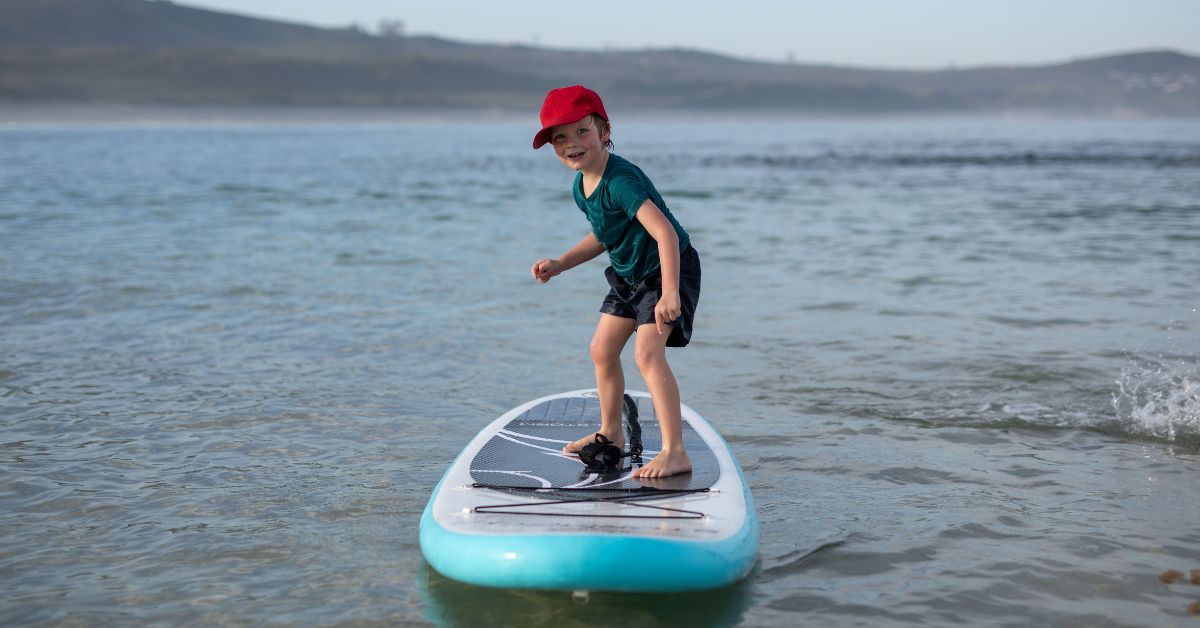

Starting Your Paddle Boarding Journey
Are you ready to embark on a waterborne adventure like no other? Paddle boarding offers a unique blend of exhilaration and serenity, allowing you to connect with nature while getting a full-body workout. For many, the challenge lies in mastering the art of standing up on a paddle board. In this Paddleboard beginner guide, we’ll walk you through the essential steps to get you upright and paddling confidently, catering specifically to first-time paddle boarders, casual paddlers, and outdoor enthusiasts eager to experience this thrilling sport for the first time. For help choosing the right board, check out our guide to the Best Inflatable Paddle Boards UK.
Understanding Paddle Boarding Basics
Paddle boarding is not just a fun activity; it’s a blend of balance, strength, and coordination. Whether you’re gliding across lakes, rivers, or coastal waters, having a firm grasp of the fundamentals is key to enjoying your experience. Learning to stand up requires both mental preparation and physical readiness, making it essential to approach it with the right mindset.
First-time paddle boarders should know that standing up on a board offers better visibility and manoeuvrability while giving a full-body workout. Additionally, mastering this skill builds your confidence on the water, paving the way for longer and more enjoyable paddling sessions. Keeping up with current paddle boarding trends elevates the fun factor, as each experience allows for unique personal achievements.
For essential safety advice, check out the RNLI’s Paddle Boarding Safety Guidelines.
Tips for Standing Up on a Paddle Board: Step-by-Step Instructions
Now that you’re acquainted with paddle boarding’s essentials let’s break down the process of standing up on a paddle board step by step. Understanding how to balance on a paddle board begins with a few straightforward tips and progressive actions. Start by finding a calm body of water with minimal wind and waves, making it easier to maintain your balance.
Follow these steps to stand up successfully:
- Finding the Right Center of Gravity
- Engaging Your Core
- Transitioning to Standing
- Paddling with Confidence
- Adjusting Your Stance
1. Finding Your Center of Gravity
Begin on your knees at the centre of the board. This is your starting position before you attempt to stand up. Distributing your weight evenly will stabilise the board, ensuring that your movements do not cause you to tip over. Balance is critical at this stage, so take a moment to find your footing or kneeling position before proceeding further.
Establishing a good centre of gravity is integral to your paddle board experience. Once you feel secure while kneeling, you’re prepared for the next step in transitioning to standing. Maintaining your centre of gravity while standing will make for a smoother experience when paddling.
2. Engaging Your Core
A strong core contributes significantly to maintaining stability on your paddle board. Engage your abdominal muscles as you prepare to rise to a standing position. Building your core strength will also enhance your balance, making it easier to manoeuvre the paddle board. While transitioning, try to avoid excessive movements; keep your upper body still as you adjust your feet.
Core engagement is one of the most important stand up paddle boarding tips you can follow. Strengthening this area will not only help with your paddle boarding skills but can also enhance your performance in various other physical activities.
3. Transitioning to Standing
To stand up, rise slowly, using the board’s stability to assist you. Start with your dominant foot, placing it first on the board. Make sure that your feet are shoulder-width apart to create a solid base. This stance will be critical for effective paddling and better balance.
Keeping your knees slightly bent and your feet flat on the board is another tip for balancing on a paddle board. These positions will allow you to adjust quickly if you feel unsteady, ensuring you stay on the board as you become more comfortable paddling.
4. Paddling with Confidence
Once you are standing, learning how to paddle effectively is time. Position your paddle by holding it with both hands spaced shoulder-width apart. When paddling, utilise your lower body and core for better stability. This coordination will enhance your paddling efficiency and contribute to your overall balance on the board.
Start paddling with smooth strokes, committing your body to each movement. This practice will develop your rhythm and encourage confidence as you explore different water bodies. Remember that good technique can help you become a more formidable paddler while enjoying your time on the water.
5. Adjusting Your Stance
After you manage to stand and paddle successfully, the next step is stabilising your stance. Keep your centre of gravity low and promote balance by slowly shifting your weight from side to side. This gradual adjustment allows your body to adapt to the movements of the water, cultivating a sense of harmony between you and your paddle board.
Always maintain your gaze directed towards the horizon rather than your feet. Fixing your eyes on the distant view will help anchor your balance, a common technique among seasoned kayakers and paddle boarders. Ultimately, it will enhance your confidence while paddling.
Common Mistakes to Avoid While Learning to Stand Up
Learning to stand up on a paddle board can be a fun process, but it has its pitfalls. Be mindful of common mistakes that can hinder your progress. First and foremost, avoid tension in your body while on the board. Staying relaxed helps maintain your centre of gravity, while excessive tension can throw you off balance. Avoid standing up too quickly or with your feet too close together — both can make you lose balance.
Rushing through the learning steps is another frequent error. Practice each step until you feel confident before progressing to the next. Lastly, remember to keep your head up. Looking down can lead to unnecessary changes in your balance, making staying upright significantly more challenging.
Not using a leash is another common error, which can pose a safety risk. Always use leashes and safety gear suitable for your activity and water conditions.
Looking for more beginner-friendly advice? Check out Go Paddling’s Beginner Tips.